Mental wellness
Anchor
Designing adaptive interactions that reduce cognitive load before asking users to act.
Key idea Support users before expecting action.
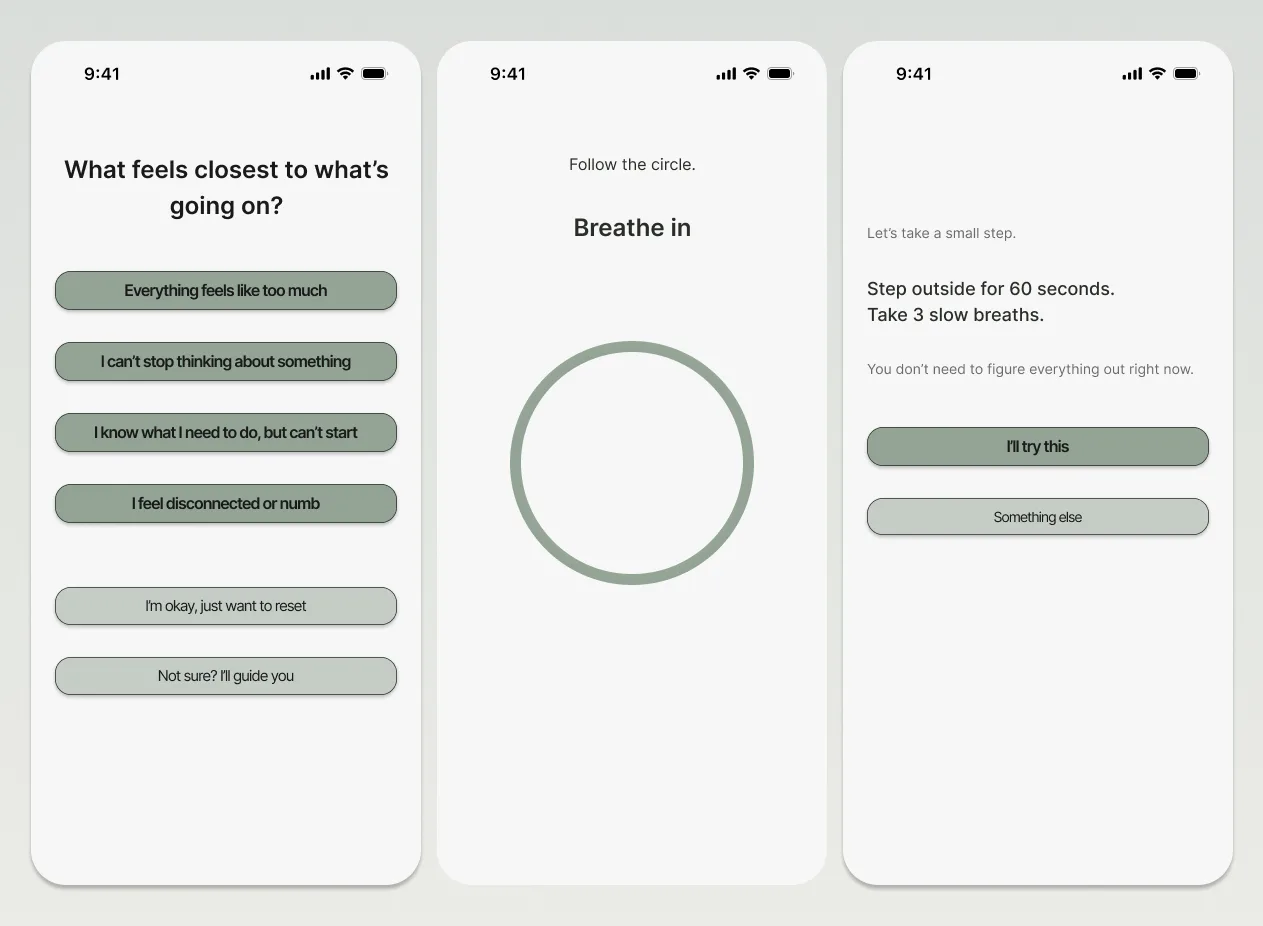
This is the short version. The full study is here when you have more to give.
The idea
Most interfaces assume you show up ready. Anchor doesn’t.
Anchor is a state-aware interaction system that reads cognitive load in the moment and adjusts what it asks of you. Users don’t need more advice. They need help acting differently in the moment.
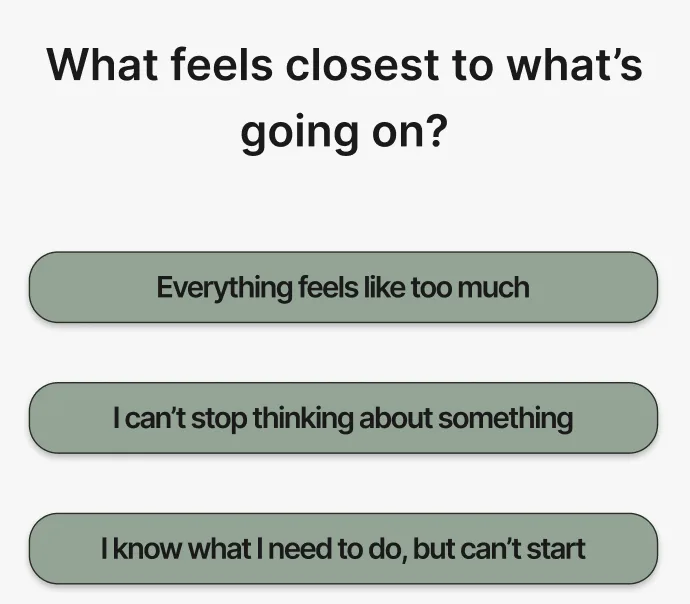
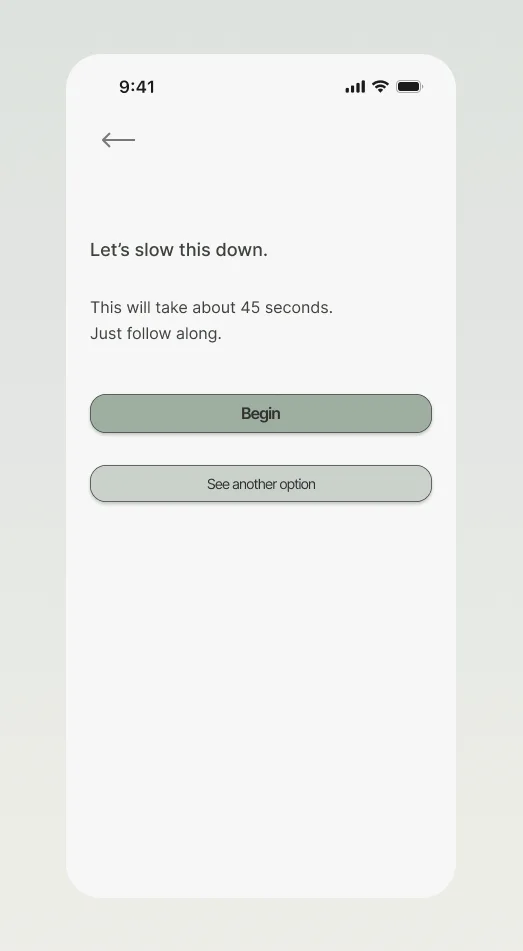
The system moves from Entry (single tap, no diagnosis needed) to an Adaptive Path (interaction depth adjusts to cognitive state) to Stabilization (sequenced decisions reduce overload). Reflection is introduced after regulation.
How I approached it
01 Interrupt before insight
Break the loop before analyzing it.
02 Low cognitive load
Fewer decisions, always a clear next step.
03 State-specific response
Each pattern gets its own strategy.
The system
Every intervention in Anchor: Pause Protocol, Spiral Reset, Momentum Builder, Numbness Reset, runs through the same four-stage pattern underneath. What follows is one protocol, Spiral Reset, walked through in full.
01 Recognition
Identify the emotional state without requiring self-diagnosis.
02 Regulation
Interrupt the pattern before asking anything else of the user.
03 Redirection
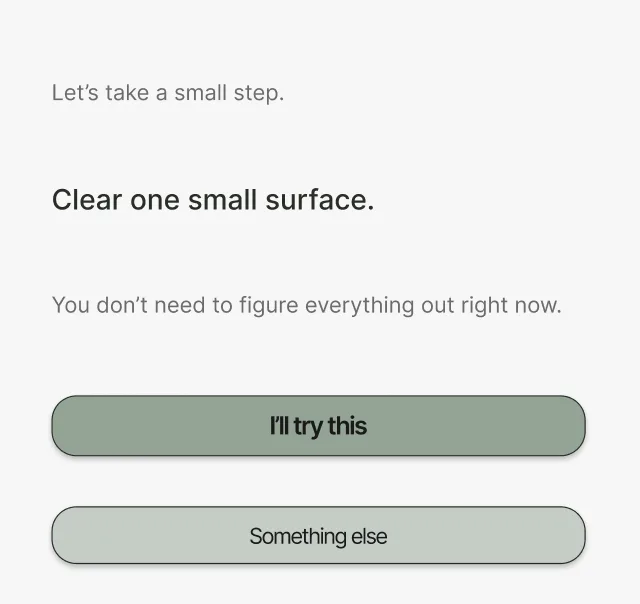
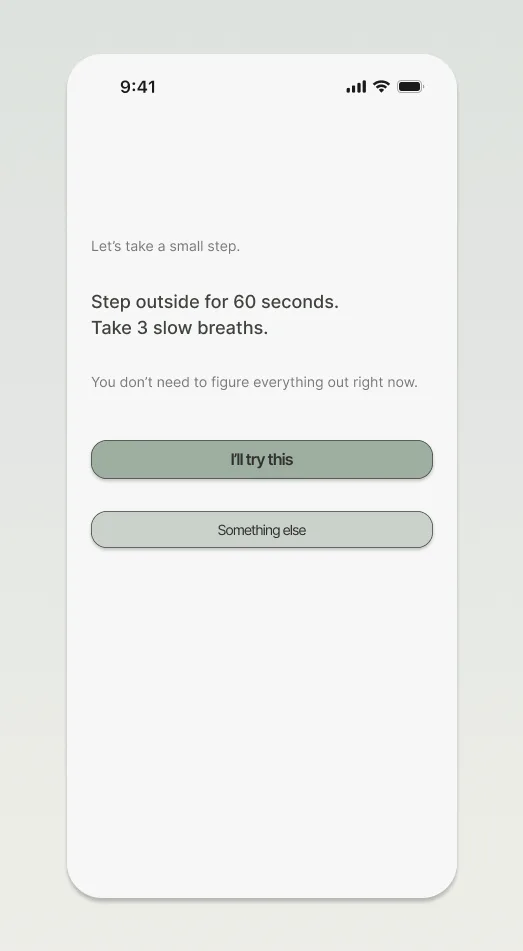
Convert regulation into one small, concrete action.
04 Agency
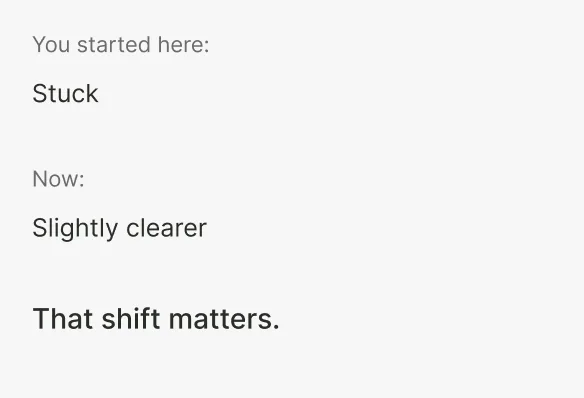
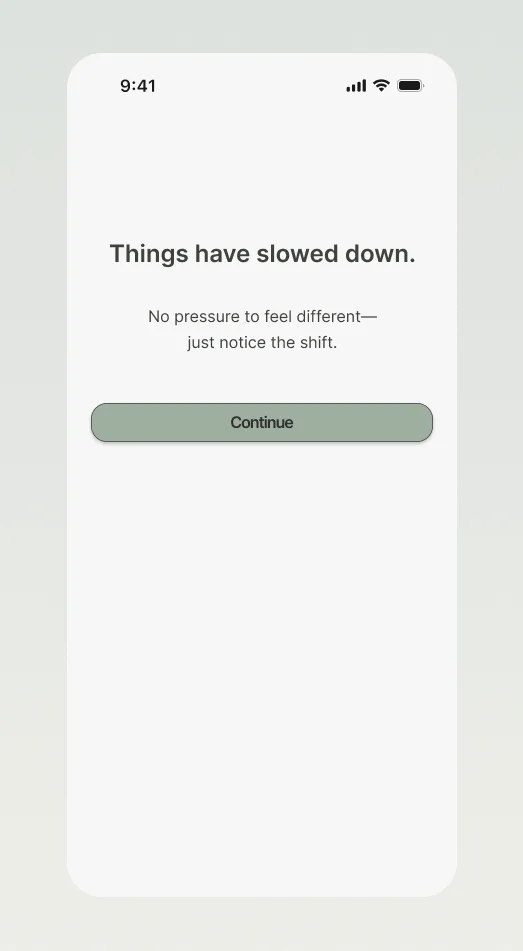
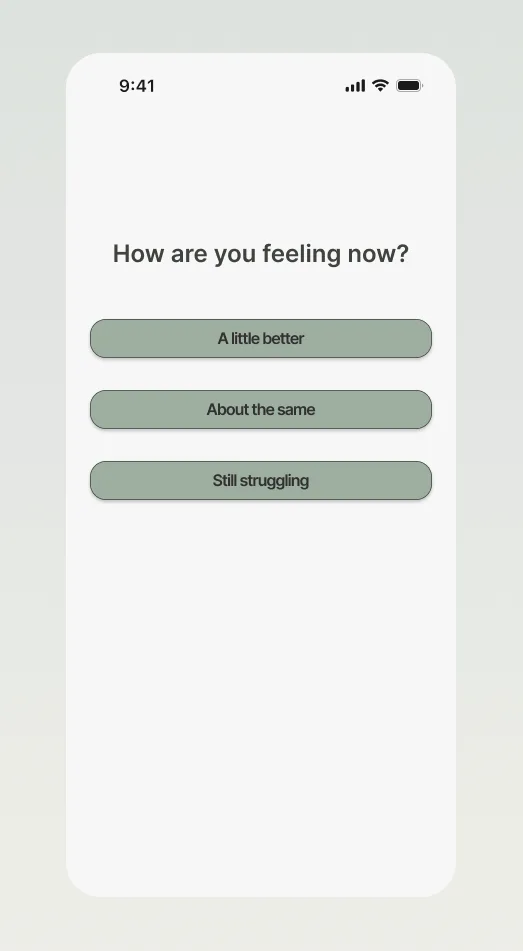
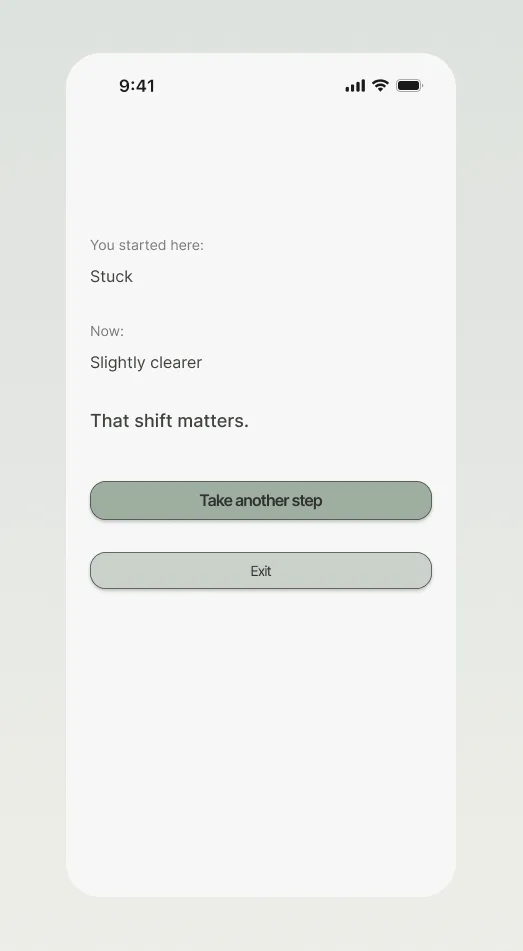
Confirm the shift and hand control back to the user.
Decisions
Restraint over relief
01 Mandatory downshift
The nervous system settles before cognitive processing resumes.
02 Emotional neutrality
Calm, direct language throughout.
03 Micro-actions over ambition
Ambitious asks fail when motivation is already low. Tiny ones build momentum.
04 Interrupt before insight
Users are guided out of the loop before being asked to make sense of it.
The prototype
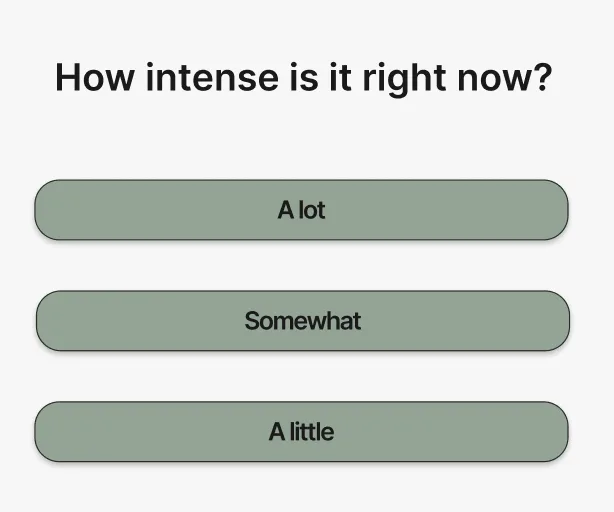
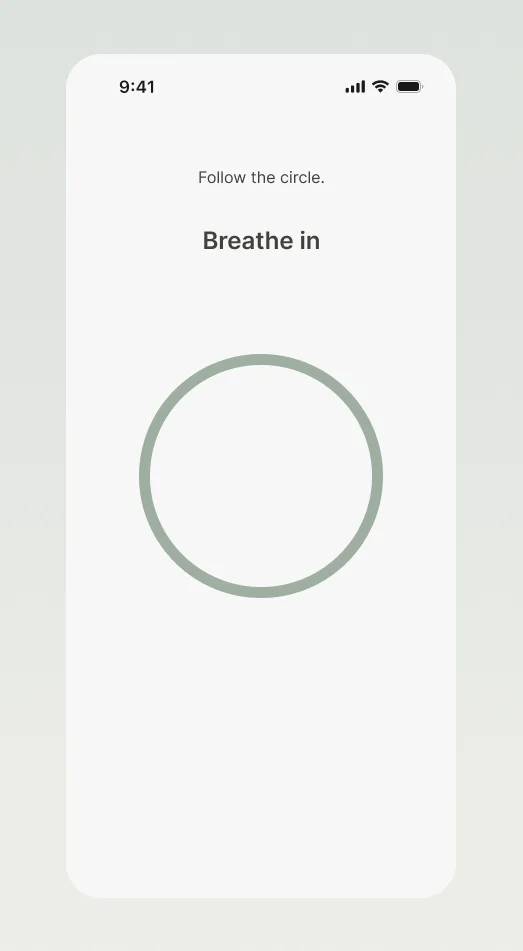
The prototype demonstrates the Entry and Stabilization flows: the highest-friction moments in the system.
What testing showed
6 participants completed the flow while simulating overwhelm or cognitive looping. The question was directional: does the system create a perceptible shift, and where does it break?
What landed
- Attention shift confirmed. Every participant reported a noticeable shift in attention during breathing. All completed the flow without guidance. No changes needed: the core intervention does what it was built to do.
- Self-diagnosis is unreliable. Participants under-reported their own intensity when self-selecting a state. This validated the Recognition decision: why it doesn’t require self-diagnosis.
What didn’t
- Timing was unclear. Breathing rhythm and duration weren’t clear on first pass. Added explicit inhale/exhale cues and tighter visual sync.
- Micro-actions are untested in the real world. Simple and realistic in testing, but not validated under real emotional load. Left as an open flag for real-world testing. No change yet.
Reflection
Static interfaces assume a stable user. This one doesn’t.
Pacing and constraint aren’t secondary usability concerns in high-load states. They’re the product. The difference between support and friction is timing.
Still open. Whether state-aware intervention produces lasting change, or just momentary stabilization. Early signal points to interruption. Sustained behavior change is untested.